

River as Symbol: Chapter 11
Authors have long used waterways to make their point.

OK, fine! Whatever. I admit it!
I stole the idea from Heart of Darkness.
And Huckleberry Finn.
Let me explain.
Buy COMMUNITY DAY now for your summer reading list! Get it here!
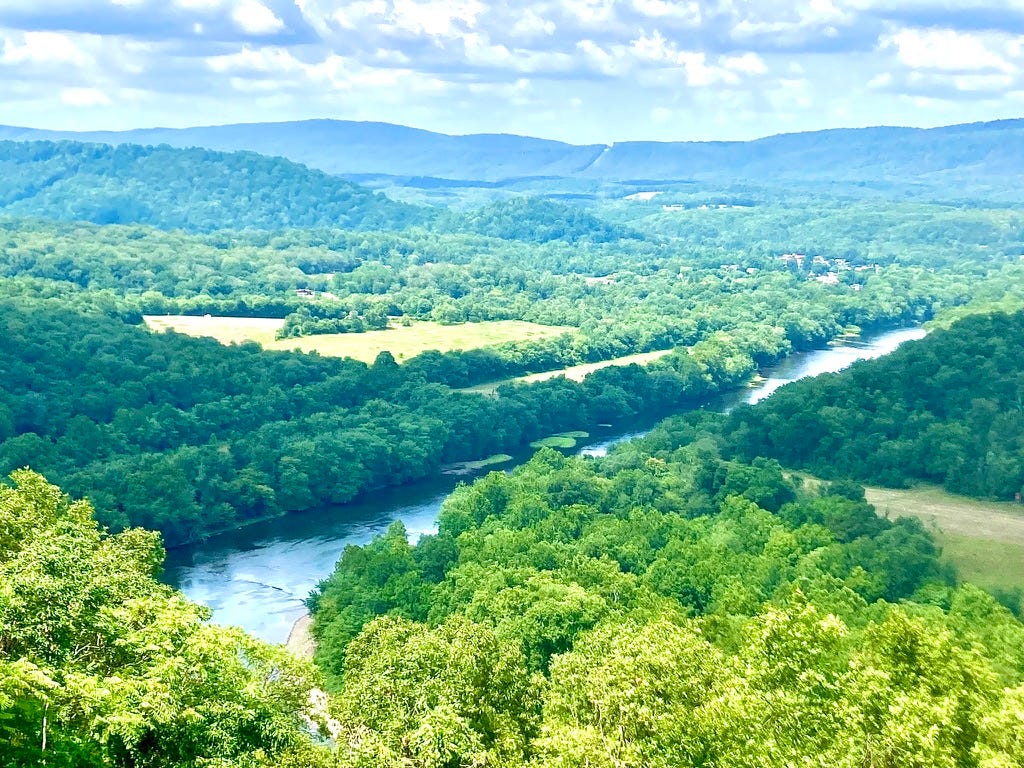
Fluvial Meaning
In any good novel, the setting reinforces the story. The author makes sure the novel’s themes are emphasized and symbolized by the place.
If the author wants to explore loneliness, she might set the story on an island, in a mountain cabin, or aboard a ship on the ocean. If he wants to discuss volatility and strife, he might set it at the bottom of a volcanic mountain or in a demilitarized zone between antagonistic nations.
Authors often use rivers, specifically, in this way. In Joseph Conrad’s Heart of Darkness, the Congo River is a central character. Conrad uses it to explore civilization, barbarism, human depravity, and more.
In Mark Twain’s The Adventures of Huckleberry Finn, the Mississippi symbolizes peace, freedom, nature, and adventure.
There are plenty of other literary examples of symbolic rivers and other waterways: The Odyssey, Fahrenheit 451, A River Runs Through It, A Farewell to Arms, Beloved, The Mill on the Floss.
I used a made-up river to reinforce the most important themes of COMMUNITY DAY. I called the river the Ohunka.
Chapter 11 is dedicated to the river and its broader meaning.
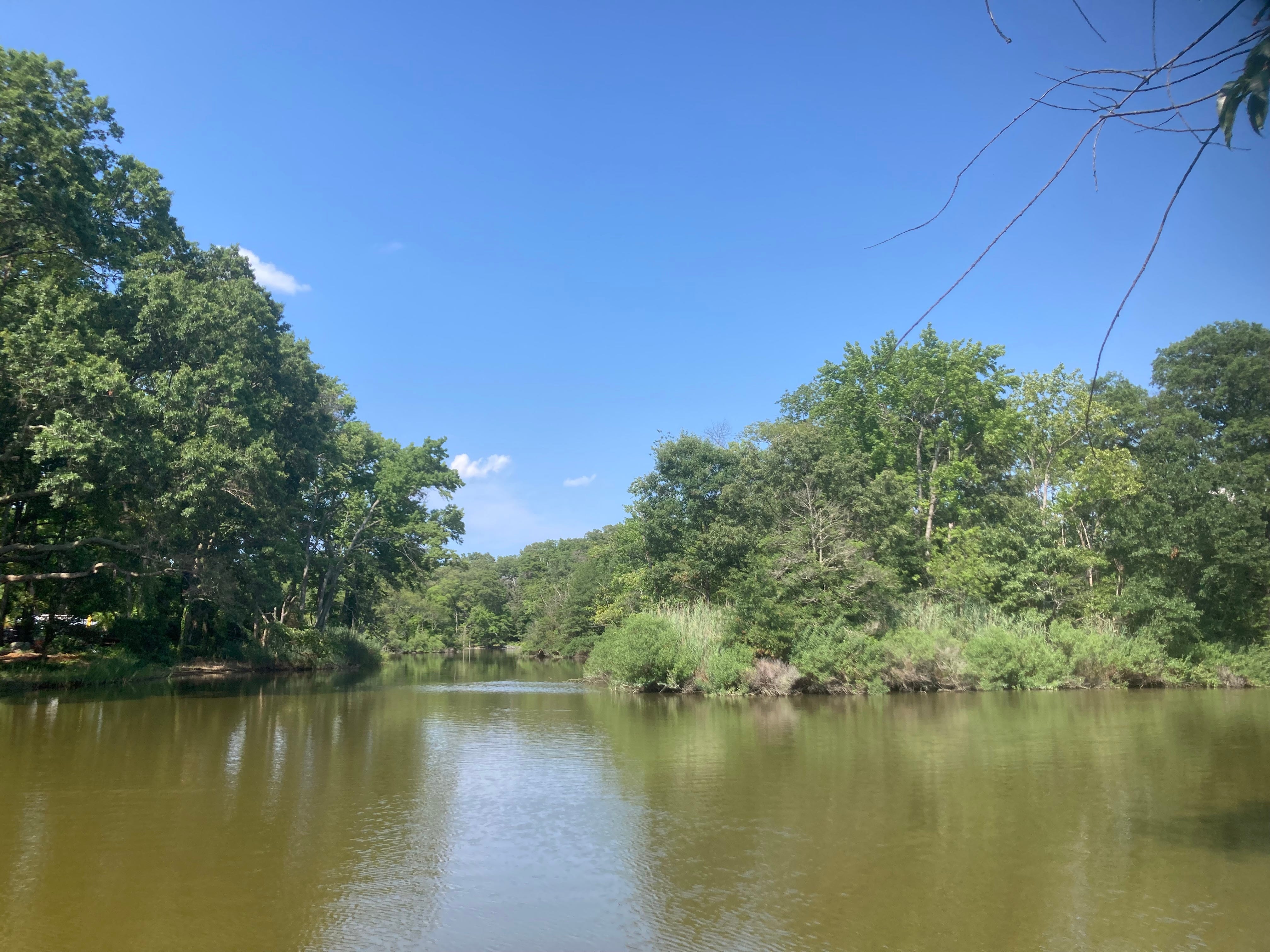
Ohunka as Symbol
I wanted the reader to know how central, literally and figuratively, the Ohunka is to the story. So here’s its introduction at the top of the chapter.
The Dew Drop, our neighborhood, and much of what passes for attractions in the county are within a stone’s throw of the pitiful Ohunka River.
I want the reader to know that the county doesn’t have much going for it; nor does the Ohunka.
Next, I wanted to give the impression that the river was entirely spent. Enervated. That it’s more like a corpse than a living being. Like someone suffering from depression or something on its last legs, it will occasionally show some brief signs of life. But, in the end, it is at its end.
It mopes through six counties and empties itself, exhausted, into the lake up north. Occasionally during the spring, the water is high and the current active enough to allow for a couple weeks of splashing and tube floating in a few spots. But generally it’s so shallow and stagnant that it attracts more mosquitoes than humans.
I wanted the reader to sense that the river is like the narrator and the county: Depressed, lethargic. Dying.
But I also wanted the reader to know that the county and the narrator used to be much, much stronger. They had something to give. They were important. But time and events ended that. So that’s how I would describe the river’s past.
Two centuries ago, they say, it was perfect for rafts transporting provisions among settlements; later, barges carried lumber and stone between the region’s mines, mills, and towns. In the generations since, drought and irrigation projects drained its volume, and trains and trucks stole its purpose.
I wanted to emphasize how the pandemic caused, and how depression causes, people to lose track of time. The haze of sorrow blends one moment into the next.
Depressed, the river idles away the time, days melting into months melting into years
Next, I wanted to emphasize the novel’s argument that interpersonal connections are a big part of an individual’s vigor. When we are tied to one another, we are strong. So I explained that the county had once been strong when it had social connections. When the county was part of a web of relationships it was robust and confident. The then-thriving river made that possible.
I learned from my research for the 300th anniversary committee that the Ohunka had, for ages, been the connection between our otherwise landlocked region and the outside world. Grangerford became the county seat because it had been a way station for merchants, politicians, adventurers, and vagabonds. Lewis and Clark even passed through. Our county and our town may not have been polished, but they were abreast of news and culture, seasoned in interchange. Approachable, assured.
I also wanted the reader to understand that the river’s collapse was a constant reminder to the county of how good things had once been and how bad they are now.
The Ohunka’s demise was the region’s. Isolation doesn’t only lead to loneliness. It breeds insularity, then vulnerability, then suspicion. Approachable and assured no more. Locals now see the river as a jilted lover sees the ex who still lives nearby: the cause of what is and the constant reminder of what was and could’ve been.
Lastly, I wanted to say something about the observers of depression and other types of pain. We might look at a suffering person or a suffering area and not comprehend the suffering at all. We might see something pleasant on the surface without appreciating the turmoil below. That’s how I’d describe the river’s observers.
Prior to the pandemic, the only souls traipsing around the river’s banks were there to take pictures of the algae blooms: vibrant patches spread across the surface, preventing sunlight from reaching underwater vegetation and decimating aquatic life: Smiling observers creating a photographic record of the Ohunka’s unvoiced suffering.
The Prequel
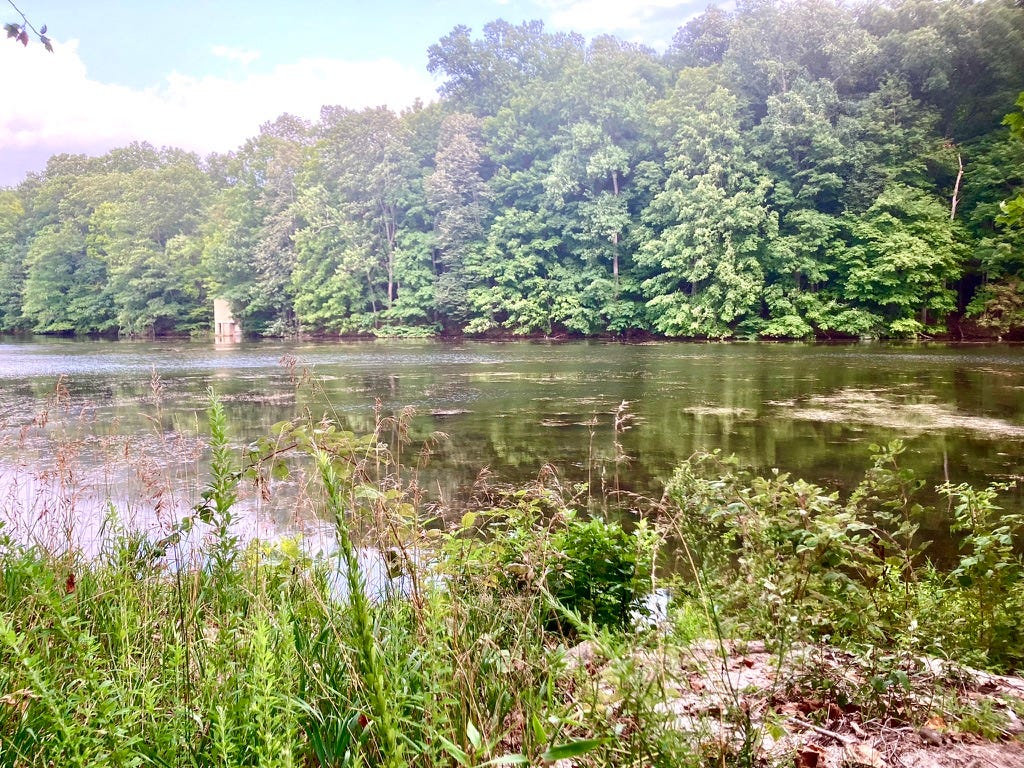
If I write the prequel to COMMUNITY DAY, it’ll be set in a real city—not like the imagined Grangerford of COMMUNITY DAY. And this real city has a river on its north side. I could easily make use of this river.
The problem is I don’t know how to make use of it yet! The themes of the prequel (as I currently envision them) don’t lend themselves to fluvial or riparian allusions.
The only hook I currently have in mind is that the bridge in the prequel’s first scene crosses this river. Once I decide how I want that scene to play out (namely, introducing the odd relationship between the two main characters), I can perhaps tie it to the river.
Maybe the river ends up as a symbol of their relationship?
Hmmm.
For previous installments of this explanation-and-exploration series:
Chapter 1: Introducing Key Characters
Chapter 2: Forest and Breadcrumbs
Chapter 4: Heisting from Hamlet