

Untruth: Chapter 9
"Being in a minority, even in a minority of one, did not make you mad."

“There was truth and there was untruth, and if you clung to the truth even against the whole world, you were not mad.” —Winston Smith, 1984
I stole the technique from Faulkner’s Sound and the Fury and As I Lay Dying. And from Silence of the Lambs, too.
Then I stole the purpose from 1984.
Let me explain!
COMMUNITY DAY is available at Amazon as both a paperback and as an ebook. You can also get it via Barnes & Noble.
Maybe the Craziness is True
I wanted COMMUNITY DAY to explore what happens when people no longer know what’s true.
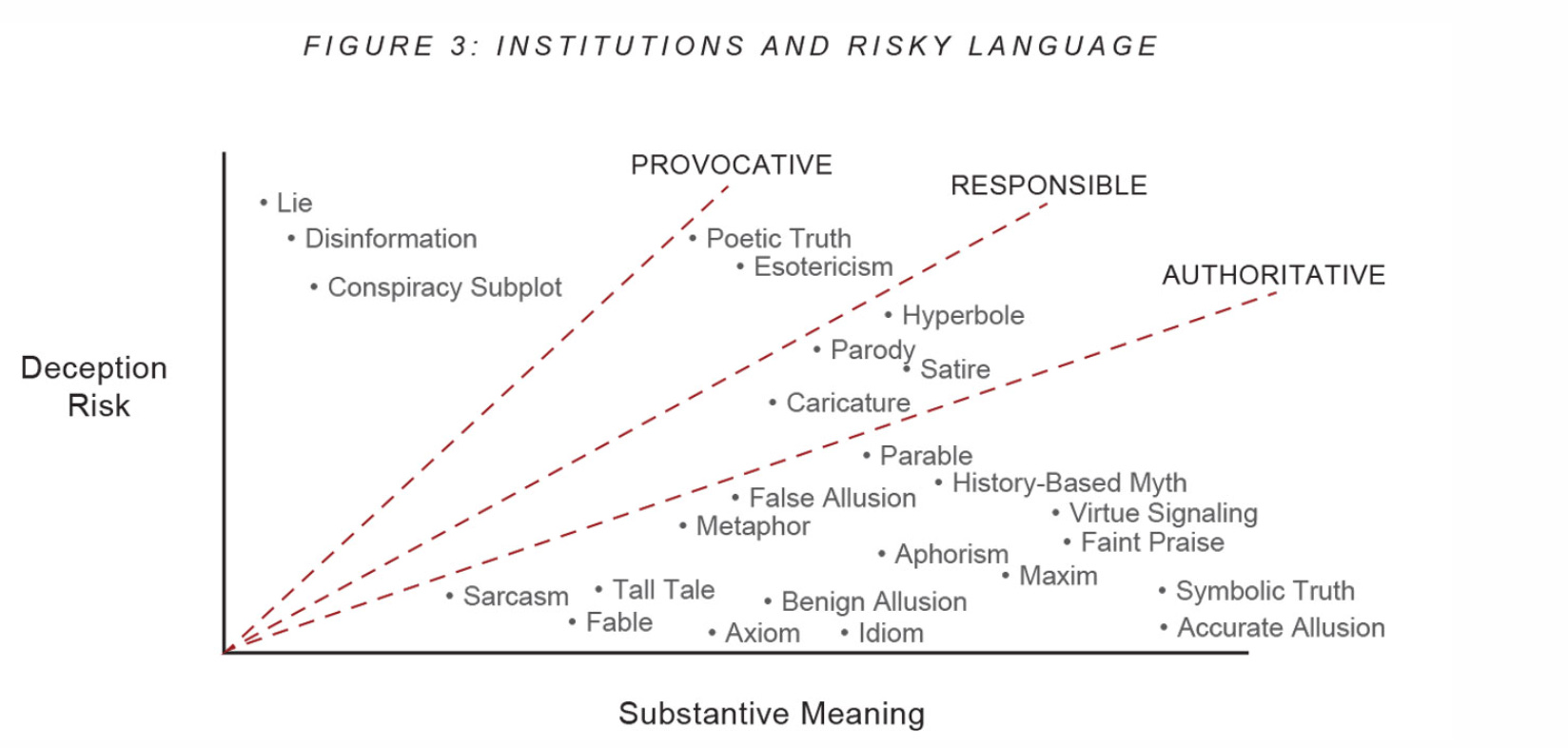
The COVID era was nuts. Conspiracy theories. Unreliable news outlets. Radical politics. “Noble lies” from the government. (In 2021, I was so perplexed by all of this that I wrote a long essay about language and the difference between “seriously” and “literally”).1
I always liked how Orwell’s 1984 had the depressed, isolated character Winston Smith trying to make sense of the insanity around him while trying to just make it through each day. I somewhat modeled my narrator after Winston—the loner navigating a mad world (other books do similar things: Slaughterhouse-Five, Catch-22, etc.).
But I wanted to do some things differently.
Distortions
In 1984, you know from the start that Winston is a pretty normal guy battling an evil, totalitarian regime. But I wanted the reader to have more doubts about my Winston (the narrator). I needed him to be a guy trying to make sense of a crazy world…even though he might be unwell himself.
Literature is full of mentally ill or otherwise unreliable narrators. I’m no fan of Faulkner, but both Sound and the Fury and As I Lay Dying have a key character incapable of fully understanding what’s going on. Those characters’ confused narrations actually help us understand big ideas. You can see similar approaches in One Flew Over the Cuckoo’s Nest, The Bell Jar, The Yellow Wallpaper, The Girl on the Train, Fight Club, Flowers For Algernon, The Catcher in the Rye, and more.
But I wanted COMMUNITY DAY to be different in a key way. I didn’t want my narrator’s un-wellness to be the story. Often, a narrator’s or other character’s mental illness or similar problem is the entire plot. Or the revelation of the illness or unhinged-ness comes near the end as the major plot twist. Think of Gone Girl or Primal Fear.
Instead, I wanted my narrator to be an unwell man narrating the events of an unwell world. I wanted to leave the reader thinking about fact and fiction. I tried to capture this in a brief conversation at the end of the novel (the last lines of Chapter 50).
“When the truth is crazy, people don’t know what to make of the truly crazy around them,” he whispered, rationally explaining the irrational.
I didn’t have anything to say.
“Maybe the craziness is true. Or maybe it’s just crazy. How can you tell?”
“I know,” I think I said.
Ulterior Motive
My twist is that maybe the narrator’s crazed tales aren’t just the result of his sickness. Maybe he’s making up stories to obscure his role in the tragic, criminal events of Community Day.
Here I stole the idea at the heart of The Silence of the Lambs and the end of Catch Me If You Can. In the former, the FBI knows that Hannibal Lecter is a mentally ill serial killer, but they still listen to what he has to say about Buffalo Bill. In the latter, Carl takes Frank’s advice about the counterfeiter even though Frank is a lifelong liar and criminal.
In COMMUNITY DAY, the attorney listens to the narrator’s stories about the roots of Community Day even though the attorney knows the narrator is mentally ill and likely a criminal.
Chapter 9 of COMMUNITY DAY is the second email from the doctor to the lawyer. The email explains that the lawyer will now have access to information that she can use to verify the narrator’s claims.2
In other words, I diverge slightly from the novels and films listed above. My novel lets the reader know from the start that the narrator is unreliable. But, thanks to the doctor’s emails, the reader is able to increasingly understand which parts of which stories are true, which are imaginary, which are exaggerated, etc.
Untruth and The Prequel
All of the primary characters for the possible prequel—at least as I see them now—traffic in untruth. There’s a big secret at the beginning of the story, and several characters keep it hidden through lies. Several other characters have lies of their own.
A major theme of the novel would be the utility of lying. Virtually everyone in the story succeeds because of their lies. The two main characters suffered earlier in their careers because they were so committed to seeking the truth. Even the youngest character in the novel—a page at the state legislature—comes of age as he succeeds at lying.
A major question of the book would be whether lying is ever acceptable. Is it OK if it’s done for a good cause?
Two questions I’m wrestling with are 1) Should there be a very good character—an honest, admirable figure—who is able to succeed and thrive while refusing to partake in untruth, and 2) How can I show that those who traffic in untruth might win in the short-term while paying the price down the line?

For previous installments of this explanation-and-exploration series:
Prologue: Setting the Stage
Chapter 1: Introducing Key Characters
Chapter 2: Forest and Breadcrumbs
Chapter 3: Contradictions
Chapter 4: Heisting from Hamlet
Chapter 5: Show Don’t Tell
Chapter 6: The Mysterious Stranger
Chapter 7: The Comic Relief
Chapter 8: The Showdown
Here’s one of the key images from the essay.
It also explains why the novel is presented as a series of interview transcripts and emails from the doctor to the lawer.